
Ask any hydraulic service technician what kills pumps, valves, and cylinders, and the answer is almost always the same: contamination. Particles, water, and air in the fluid wear down precision surfaces, cause cartridge valves to stick, and turn a reliable machine into a downtime problem. Industry estimates commonly attribute the majority of hydraulic system failures to contaminated fluid.
The defense against contamination is a well-designed hydraulic filtration strategy, and that starts with understanding the different hydraulic filter types and where each one belongs in the circuit. Filter placement determines what a filter protects, how fine it can be, and how much pressure it has to withstand. Putting the right filter in the right location is what separates a system that runs for years from one that eats components.
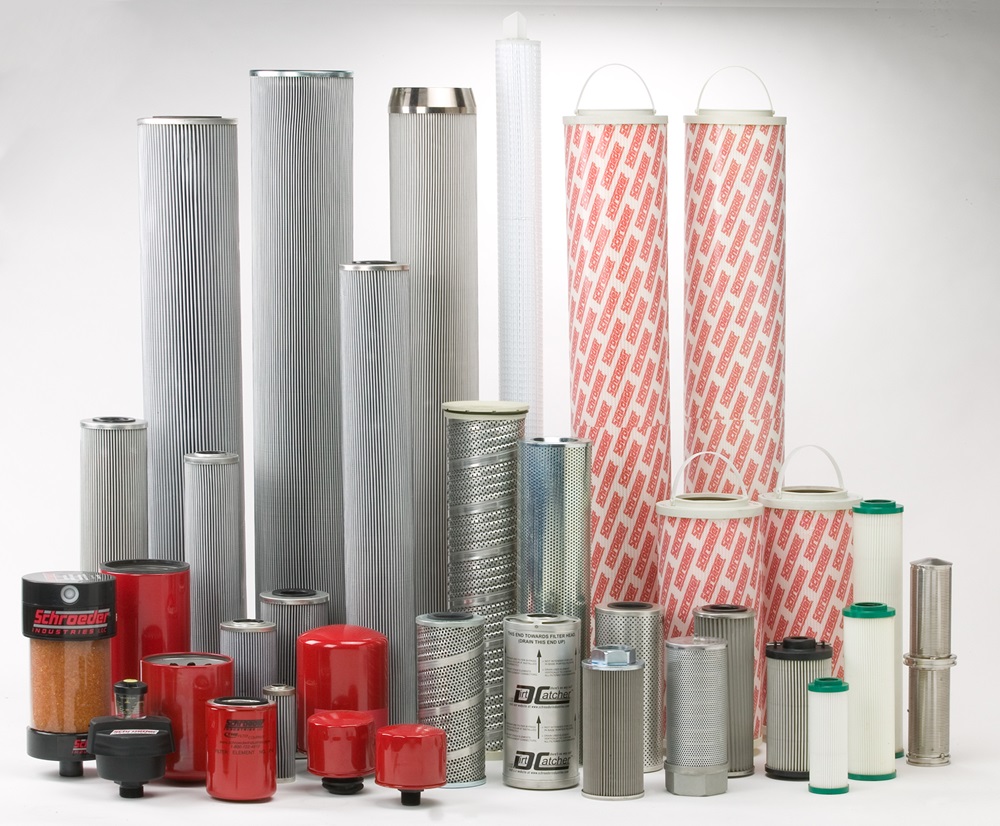
Below, we break down the main types of hydraulic filtration, how they work, and how Schroeder Industries filtration products from Hydra-Power Systems fit into each role.
Why Hydraulic Filtration Matters
Modern hydraulic components are built to tight tolerances. Clearances in pumps, servo valves, and proportional valves are often measured in single-digit microns, which is far smaller than anything the human eye can see. Particles in that size range slip into those clearances and cause abrasive wear, which generates more particles and accelerates the damage in a self-reinforcing cycle.
Contamination enters a system in several ways. It is built in during manufacturing and assembly, ingested through reservoir openings and worn cylinder seals, generated internally as components wear, and introduced every time new fluid is added. New oil is not necessarily clean oil, and fluid straight from the drum frequently fails to meet the cleanliness levels that sensitive components require.
Effective hydraulic filtration addresses each of these entry points. That is why most systems use more than one filter, with each one located to do a specific job.
Suction Filters: Protecting the Pump
A hydraulic suction filter sits on the inlet side of the pump, either inside the reservoir as a submerged strainer or in the suction line between the tank and the pump. Its job is to keep large debris out of the pump, which is often the most expensive component in the system.
Suction filters are typically coarse, usually in the range of 74 to 149 microns (roughly 100 to 200 mesh). That coarseness is deliberate. Pumps are sensitive to inlet restriction, and a fine or clogged suction filter can starve the pump and cause cavitation, which damages the pump faster than the contamination the filter was supposed to stop.
Because of this, suction filters work best as a last line of protection against large particles rather than as the primary cleanliness control. Many designers include a bypass valve and a vacuum indicator so the pump is never starved if the element loads up. In systems with piston pumps or other cavitation-sensitive designs, engineers often minimize suction filtration and rely on return line and pressure filters to keep the tank clean.
Pressure Filters: Guarding Sensitive Components
A hydraulic pressure filter is installed downstream of the pump, in the high-pressure line feeding valves and actuators. This position makes it the best place to protect sensitive components such as servo valves, proportional valves, and precision cartridge valves from anything the pump generates or passes along.
Since pressure filters see full system pressure, their housings are built heavier than other filter types, and the elements must resist collapse under high differential pressure. These filters commonly use fine media in the range of 3 to 10 microns, depending on what they protect.
Pressure filters can be built with or without a bypass. A non-bypass design with a high-collapse element is used where letting unfiltered fluid reach a critical component is unacceptable. A clogging indicator is essential either way, so maintenance teams know when to change the element before performance suffers.
Return Line Filters: The Workhorse of System Cleanliness
A hydraulic return filter captures contamination in fluid coming back from the circuit before it reenters the reservoir. Every particle generated by cylinders, motors, and valves passes through the return line, so this location catches contamination right after it is created.
Return line filters operate at low pressure, which makes them economical to build and service. They can use fine media without the cost of a high-pressure housing, and because all or most of the system flow passes through them, they do much of the work of keeping the reservoir clean. That in turn means the pump draws cleaner fluid, which reduces the load on any suction strainer.
When sizing a return line filter, the key detail is peak return flow, not just pump flow. Cylinders with large area ratios can return far more fluid than the pump delivers when retracting, and an undersized return filter creates backpressure and opens its bypass more often than it should.
For many mobile and industrial machines, a well-sized return line filter is the single most important element of the filtration strategy.
Spin-On vs. In-Line Filters
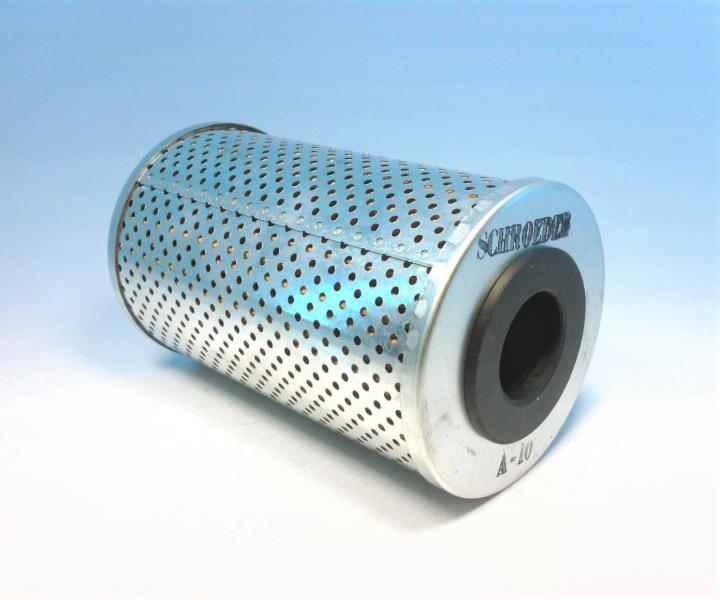 Beyond circuit location, hydraulic filters are also distinguished by housing design.
Spin-On Hydraulic Filters
A spin-on filter combines the element and housing in one disposable canister that threads onto a permanent head, much like an automotive oil filter. Spin-on filters are fast and simple to change, which makes them popular for return line and low-to-medium pressure applications on mobile equipment, agricultural machinery, and smaller power units. The tradeoff is that the entire canister is replaced at each service, and pressure ratings are lower than heavy-duty housings.
In-Line Hydraulic Filters
An in-line filter installs directly in a pipe or hose run, with a housing that stays in place while the element inside is replaced. In-line designs are available across a wide range of pressure and flow ratings, which makes them suitable for both pressure and return applications. For high-flow systems, a properly sized in-line filter offers good capacity with minimal pressure drop, and the reusable housing reduces waste over the life of the machine.
Breathers: The Most Overlooked Part of Hydraulic Filtration
Every time a cylinder extends, fluid leaves the reservoir and air rushes in to replace it. If that air passes through an open fill cap or a cheap mesh vent, it carries dust and moisture straight into the tank. On equipment working in construction, forestry, agriculture, or marine environments, the reservoir vent can become one of the biggest sources of ingested contamination.
A hydraulic breather filters incoming air before it reaches the fluid. Better breathers combine fine particulate media with desiccant to strip moisture, which is particularly valuable in humid or washdown environments where water contamination degrades fluid, promotes corrosion, and reduces lubricity. Upgrading the breather is often one of the least expensive ways to improve system cleanliness.
How to Choose the Right Hydraulic Filtration
Choosing filters means matching each element to its job. Several factors drive the decision:
Target cleanliness level. Start with the most sensitive component in the system and the cleanliness its manufacturer specifies, usually expressed as an ISO 4406 cleanliness code. That target sets how fine your filtration needs to be.
Micron rating and efficiency. A micron rating alone does not tell the whole story. Look at the beta ratio, which describes how efficiently the element captures particles of a given size. A high beta ratio at the target particle size means the filter actually removes what it claims to.
Flow and pressure drop. Size each filter for maximum flow, including peak return flow, and confirm the clean element pressure drop leaves margin before the bypass opens.
Operating pressure. Pressure filters need housings and elements rated for full system pressure, while return and suction filters can use lighter construction.
Service access. Filters that are hard to reach tend to get changed late. Indicators and accessible mounting make maintenance more likely to happen on schedule.
Finally, consider condition monitoring. Rather than changing elements on a fixed interval, fluid monitoring tools track the actual condition of the fluid over time, so maintenance teams can act on real data and catch contamination problems before they cause failures.
Schroeder Hydraulic Filtration from Hydra-Power Systems
Hydra-Power Systems is an authorized distributor of Schroeder Industries, a long-established name in hydraulic filtration and fluid conditioning. Through HPS, OEMs and end users can source the full range of Schroeder products discussed in this guide, including in-line filters, spin-on filters, suction filters, return line filters, breathers and vents, and condition monitoring tools.
Because HPS designs and builds custom hydraulic systems, our team can do more than supply a part number. We help OEMs place filtration correctly within the circuit, size elements for real-world flow, and integrate filtration into manifolds and power units built for production runs. For a refresher on how filtration fits with the rest of the circuit, see our guide to the basic components of a hydraulic system, and for more on protecting precision valves, read Cartridge Valves 101.
With locations in Portland, Oregon and Birmingham, Alabama, HPS supports customers across the industrial, mobile, marine, agricultural, construction, and forestry markets. Contact our team to talk through your filtration requirements, or request an estimate for your next project.