Mobile hydraulic systems are unforgiving. Whether the machine in question is an all-terrain crane lifting structural steel on a Pacific Northwest job site, a forestry processor working through steep Oregon terrain, or an agricultural loader running 10-hour shifts across a valley floor, the hydraulic control valve at the center of that system has to do something deceptively difficult: deliver exactly the right flow to each actuator, at exactly the right moment, regardless of what every other function on the machine is demanding at the same time.
That is not a trivial problem. In a conventional hydraulic circuit, flow distribution is inherently load-dependent. When two actuators are active simultaneously, the one facing lower resistance pulls more flow. The operator compensates with feel and experience, feathering levers to approximate smooth, coordinated motion.
The pump works harder than it needs to. Heat builds. Energy is wasted. And on a machine with five or six independent functions — a crane with boom, stick, slew, winch, and outriggers, for instance — the gap between what a simple directional valve can do and what the application actually demands becomes a genuine engineering constraint.
The Walvoil DPC series was built to close that gap. It’s a family of pre-pressure compensated, load-sensing sectional directional control valves engineered specifically for mobile equipment — designed from the ground up to deliver flow proportional to spool position, independent of load pressure, and independent of how many other functions are active on the machine at the same time. In load-sensing applications paired with a variable displacement pump, the DPC also eliminates the standing pressure differential losses that make conventional circuits inefficient.
The result is a valve that is simultaneously more precise, more efficient, and more operator-friendly than virtually any alternative in its class.
Hydra-Power Systems stocks, configures, and builds Walvoil DPC valve stacks from its Portland, Oregon facility — the HPS Build Center. For OEMs and system integrators in the Pacific Northwest, that means access to one of the most capable mobile hydraulic control platforms available today, backed by in-house application engineering and the technical depth to get a DPC stack configured correctly for your specific machine from the first order.
This post covers the DPC series in full: how load sensing works and why pre-compensation matters, the DPC130 and DPC200 in technical detail, the control options available, the applications where these valves belong, and how the HPS Portland Build Center supports DPC projects from specification through final assembly.
The Problem That Load Sensing Solves
To understand why the Walvoil DPC series matters, it helps to understand the fundamental limitation it was designed to overcome.
In a basic open-center hydraulic circuit, the pump runs continuously and flow passes through the directional valve back to the tank when no function is active. When an actuator is operated, the spool shifts and flow is redirected to the cylinder or motor. The amount of flow reaching that actuator depends on the pressure drop across the metering edge of the spool — and that pressure drop, in turn, depends on the load the actuator is working against.
Two problems emerge immediately. First, when two actuators are operated at the same time, flow divides preferentially toward the lower-load function. The operator cannot independently control both functions without compensating manually. Second, when the system is not under load, the pump is still producing flow and pressure that has to be dumped across the relief valve or recirculated unloaded — consuming energy with no productive output.
Variable displacement pumps operating in load-sensing mode solve part of this: the pump adjusts its displacement to maintain a fixed margin above the highest load pressure in the system, eliminating the standing full-pressure losses of fixed displacement circuits. But without pressure compensation at the valve itself, multi-function simultaneous operation is still compromised. Flow still divides by load rather than by spool position.
Pre-pressure compensation, which is the architecture of the Walvoil DPC series, resolves this at the valve level. Each working section contains an individual pressure compensator positioned upstream of the metering edge. This compensator maintains a constant differential pressure across the spool regardless of the downstream load.
The result is that flow through any given section is determined entirely by spool position — by how far the operator has moved the lever or how much signal has been sent to the proportional solenoid. Load pressure variation on one actuator has no effect on flow to another. Simultaneous operation of multiple functions produces coordinated, repeatable motion that matches operator input.
This is the core principle behind the DPC series, and it is what distinguishes it from standard sectional valves, from post-compensated flow-sharing architectures like the Walvoil DPX, and from simple open-center monoblock valves. Pre-compensation gives each section its own flow authority. The machine responds to the operator, not to the load.
When operating under saturation conditions — when the combined flow demand of all active sections exceeds pump capacity — the DPC handles this gracefully as well. All sections reduce flow proportionally, maintaining the ratio of flow between functions rather than collapsing toward the lowest-resistance path. This keeps coordinated motion intact even when the pump is working at its limit.
The Walvoil DPC Series: Family Overview
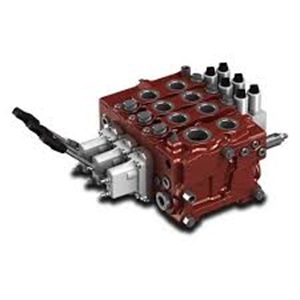 The DPC series encompasses two sizes, the DPC130 and the DPC200, differentiated primarily by flow and pressure capacity. Both operate on the same pre-compensated load-sensing principle and share compatible working sections, making it possible to mix sections from both sizes in a single valve stack where application requirements demand it.
The DPC is designed for open-center circuits with fixed displacement pumps and closed-center circuits with variable displacement load-sensing pumps. This flexibility makes it applicable across a wide range of mobile equipment configurations, from smaller machines with gear pump circuits to large, multi-function machines running variable piston pump systems.
Both sizes feature a modular sectional construction. Each valve stack consists of an inlet section, a configurable number of working sections (up to ten per stack), and an outlet section. Working sections are stackable, with each section adding one independently controlled hydraulic function to the circuit. This modularity means the DPC can be scaled to match the exact function count of the application without designing around a fixed block format.
The inlet section handles the load-sensing signal network, the pressure limiting function, and in some configurations the standby pressure and flow control for the variable displacement pump. The outlet section contains the tank port connection and, depending on configuration, additional pilot or drain connections.
DPC130: Specifications, Options, and Configuration
The DPC130 is the standard-size member of the series, designed for applications requiring flow up to 100 liters per minute (26 US gpm) at the working ports, with a total nominal flow capacity of 150 liters per minute (40 US gpm). Maximum operating pressure is 315 bar (4,560 psi). Sections have a 48 mm (1.89 inch) pitch and stacks can include up to ten working sections.
The DPC130 is suitable for both variable displacement pump circuits in closed-center configuration and fixed displacement pump circuits in open-center configuration. Closed-center operation with a variable displacement load-sensing pump is where the DPC130 delivers its most significant efficiency advantages: the pump tracks load demand precisely, operating only at the flow and pressure the system requires at any given moment, and the pre-compensated sections ensure that simultaneous multi-function operation remains smooth and independent throughout.
Inlet Section Options
The inlet section of the DPC130 defines the overall circuit architecture. Options include inlet sections configured for open-center fixed-displacement circuits, closed-center variable-displacement load-sensing circuits, and special inlet configurations featuring a shut-off spool and a copy spool with damper configuration. The copy spool with damper inlet is a less common but important option for applications requiring controlled unloading behavior, such as systems that need to dump load-sense signal pressure in a controlled manner when all spools return to neutral.
Working Section Spool Options
Each working section contains one directional spool controlling one hydraulic function. Spool options cover a range of metering profiles and center configurations to suit different actuator types and application behaviors. Motor spools, cylinder spools, regenerative spools, and float position spools are all available within the DPC130 section catalog.
Port relief valves can be added to individual working sections, limiting maximum pressure at the actuator port independent of the system relief setting. This is important for applications like boom cylinders and winch motors where load-induced pressure spikes can exceed the main system setting under dynamic conditions. Load-sense relief valves can also be installed at individual sections to limit the maximum load-sensing signal from that section, effectively capping the pump margin contribution from that function.
Cavity plugs are used to block unused optional ports in working sections, allowing a single section body to serve multiple circuit configurations without requiring different castings.
Control Options
The DPC130 supports a broad range of control input types, and this is where the valve’s flexibility for different machine architectures becomes particularly clear.
Manual lever control is the simplest option. A mechanical lever assembly attaches directly to the spool end, allowing the operator to stroke the spool by hand. This is appropriate for smaller machines and applications where the operator is positioned close to the valve, such as certain municipal vehicles and compact equipment.
Hydraulic proportional control uses pilot pressure, typically supplied by a joystick pilot valve or a remote pilot pressure source, to stroke the spool. Pilot pressure acts on one or both ends of the spool against a return spring, producing spool displacement proportional to pilot pressure. This is the most common control type on mid-range mobile equipment, where the operator controls functions through a joystick that modulates pilot pressure rather than commanding the spool mechanically. The proportional pilot system allows for smooth, modulated control with the joystick positioned remotely from the valve in the operator cab.
Electro-hydraulic proportional control adds a solenoid pilot valve stage between the electrical command signal and the main spool. A proportional solenoid converts an electrical current signal — typically 0–1 A or driven by PWM — into a pilot pressure that then strokes the main spool. This control type is essential for electronically managed mobile systems where joysticks output electrical signals rather than direct pilot pressure, and for systems using electronic controllers to manage machine functions. It enables features like dead band adjustment, ramp control, and integration with machine control systems.
Optional spool position feedback sensors are available for DPC130 sections equipped with electro-hydraulic proportional control. These sensors provide a position signal back to the machine controller, allowing closed-loop spool position control. This capability is significant for applications requiring precise, repeatable actuator positioning — such as automated sequencing, telescoping crane sections with position limits, or electro-hydraulic load-hold functions. Spool position feedback also enables diagnostics: the controller can detect spool stiction, failure to respond, or discrepancy between command and actual position.
The DPC130 is explicitly designed to work in synergy with the Walvoil electronic system range, which includes joystick pilot devices, electronic controllers, and display systems. This means a machine designed around DPC130 valves with electro-hydraulic control can be treated as a complete mechatronic system, with Walvoil providing compatible hardware across the control chain.
DPC130 Applications
The DPC130 is the right size for the majority of mid-range mobile hydraulic applications. Primary application categories include agricultural machinery (tractors, telehandlers, combines, sprayers), all-terrain cranes in the small-to-mid-size range, drilling rigs, garbage compactors and refuse collection vehicles, forestry equipment, aerial work platforms, and municipal service vehicles. Any machine requiring simultaneous independent control of three to ten hydraulic functions, with flow demands at or below 100 l/min per section and system pressures at or below 315 bar, is a natural DPC130 candidate.
DPC200: Specifications, Options, and Configuration
The DPC200 is the high-capacity member of the DPC series, designed for applications where the DPC130’s flow capacity is not sufficient. The DPC200 supports flow up to 200 liters per minute (53 US gpm) at the working ports, with a total nominal flow capacity of 260 liters per minute (69 US gpm). Maximum operating pressure is 420 bar (6,100 psi) — significantly higher than the DPC130, making the DPC200 appropriate for high-pressure applications in heavy construction, marine, and heavy industrial contexts. Section pitch is 53 mm (2.09 inches) and stacks can accommodate up to ten working sections.
The DPC200 uses the same pre-compensated load-sensing architecture as the DPC130. It is stackable with DPC130 working sections in some configurations, allowing a hybrid stack where high-flow functions are served by DPC200 sections and lower-flow functions use DPC130 sections within the same valve body.
Control options for the DPC200 mirror those of the DPC130: manual, hydraulic proportional, and proportional electro-hydraulic, with optional spool position sensors. The same synergy with the Walvoil electronic system range applies.
The DPC200 is designed for the upper tier of mobile applications. Typical primary applications include large wheel loaders, drilling rigs with high-flow rotary drive functions, cranes in the heavy-lift category, marine platform cranes, and large agricultural equipment such as self-propelled sprayers and forage harvesters. Any application requiring working port flow above the DPC130’s 100 l/min capacity, or system pressures in the 315–420 bar range, should be evaluated against the DPC200.
The shut-off and copy spool with damper inlet configuration available on the DPC200 is particularly relevant for applications like crane pedestal control, where the ability to lock out hydraulic function by cutting the inlet supply — rather than relying on individual section centering — provides an additional layer of safety and control.
Load Sensing System Architecture: Making the Most of the DPC
The DPC series delivers its full performance potential when integrated with a variable displacement piston pump operating in load-sensing mode. Understanding how the load-sensing signal network functions across a DPC stack is essential for designing a system that works correctly.
The Load-Sense Signal Network
Each working section in a DPC stack continuously reports the load pressure at its actuator port to the load-sense signal network — a dedicated internal gallery that runs through all sections and terminates at the inlet section. The inlet section reads the highest load-sense signal present across all active sections and reports this to the pump’s load-sensing control.
The pump’s load-sensing regulator maintains pump output pressure at a fixed margin above this highest load-sense signal, typically 15–25 bar depending on the pump specification. This margin — the standby differential — is what the pre-compensators in each section use to operate. Each compensator maintains the differential pressure across its spool equal to the standby differential, ensuring that spool position is the only variable controlling flow through that section.
When all spools are in neutral, no load-sense signal is present, the pump de-strokes to minimum displacement, and system pressure drops to standby (typically 20–30 bar). This is a fundamental efficiency advantage over open-center fixed-displacement circuits: a machine at idle with a DPC/variable pump system consumes only the power needed to maintain standby pressure — a fraction of what it would consume driving a fixed-displacement pump through an open-center circuit at full flow.
Fixed Displacement Pump Configurations
In open-center configurations with a fixed displacement pump, the DPC operates without the pump-level efficiency gains of load sensing but still delivers the key valve-level benefit: simultaneous multi-function independence. Flow sharing and proportional control remain intact regardless of load variation. For applications where a variable displacement pump is not justified by cost or complexity — certain agricultural implements, smaller utility machines — the DPC in open-center configuration is still a meaningful upgrade over conventional non-compensated sectional valves.
Saturation Handling
When the total flow demand of all active DPC sections exceeds the pump’s available flow — saturation — the load-sense regulator cannot maintain the full standby differential across all compensators simultaneously. Each compensator reduces its pressure differential proportionally, reducing flow through each active section in the same ratio. The operator experiences a simultaneous slowdown of all active functions rather than the uncontrolled diversion of flow toward the lowest-load function that occurs in non-compensated circuits under saturation. Coordinated motion is maintained.
This behavior is a direct consequence of pre-compensation and is one of the reasons DPC valves are preferred for applications like cranes and telehandlers where the operator must maintain control of multiple simultaneous movements during critical load-handling operations.
Mobile Equipment Applications: Where the DPC Belongs
The Walvoil DPC series is purpose-designed for mobile and off-highway equipment. Its combination of pre-compensation, load sensing, modular stackability, and multiple control input types makes it applicable across a broad range of machine categories. The following sections detail the primary application contexts relevant to Pacific Northwest OEMs and operators.
Agricultural Machinery
Modern agricultural equipment — from large-frame tractors with multiple hydraulic remotes to telehandlers and self-propelled implements — demands simultaneous independent control of many functions: lift, tilt, auxiliary circuits, steering priority, and implement-specific actuators. The DPC130’s multi-section capability and compatibility with variable displacement piston pump circuits makes it a natural fit for these applications.
In tractor remote valve applications, the DPC130’s ability to provide flow-proportional response independent of the implement’s varying load pressure improves implement controllability significantly compared to fixed-orifice or standard directional valve configurations. Operator input translates more directly to actuator motion, and multi-function simultaneous operation — for example, lifting and tilting simultaneously with a loader bucket — produces smoother, more predictable results.
For self-propelled agricultural machinery like sprayers or forage harvesters, where system pressures and flow rates can push toward the DPC200’s operating range, the larger valve size provides the flow capacity needed to serve multiple high-demand functions without the flow-sharing compromises of a smaller valve operating near its limits.
Construction and Earth Moving Equipment
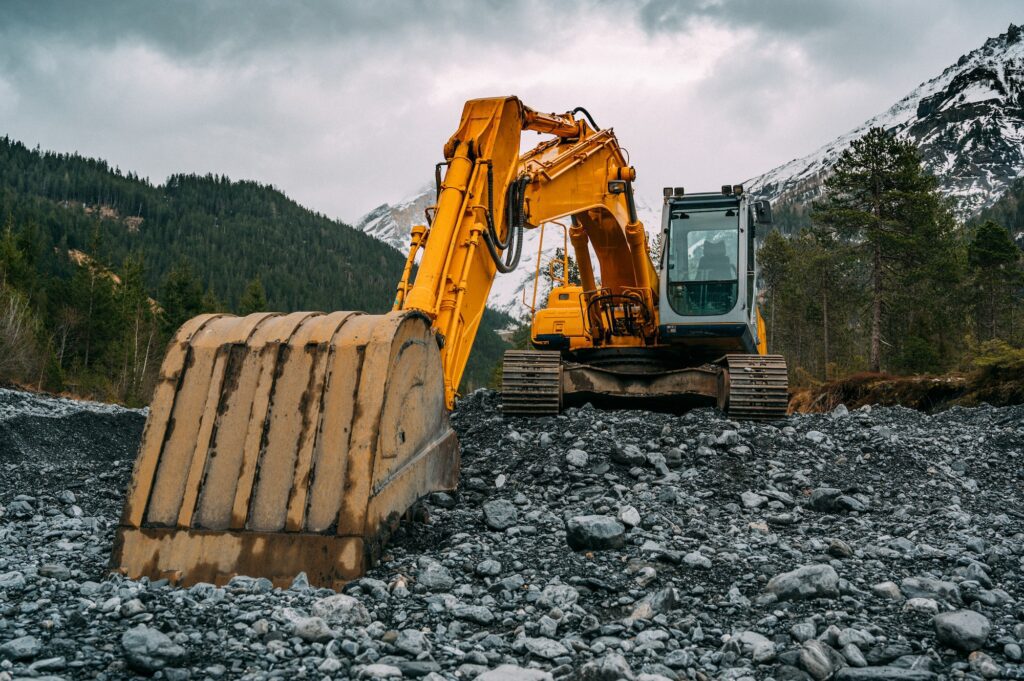
Excavators, wheel loaders, backhoes, and skid steers are the central applications in this category. Construction equipment is characterized by continuous, high-duty operation, high contamination exposure, and operators who run multiple functions simultaneously throughout the workday. The DPC’s load-sensing pre-compensation directly addresses the core challenge of these applications: making simultaneous boom, stick, bucket, and slew functions respond proportionally to operator input regardless of relative load variation.
For smaller excavators and compact construction equipment, the DPC130 covers the majority of applications. Larger wheel loaders and excavators in the 20-ton-plus class, where main circuit flow demands can exceed 150 l/min, are better served by the DPC200 for primary functions.
The DPC’s compatibility with electro-hydraulic proportional control and spool position sensors also supports the trend toward electronically managed construction equipment — machines where the operator interface is digital, machine control systems manage safety interlocks and performance envelopes, and hydraulic functions are commanded electrically rather than through direct pilot pressure.
Cranes and Lifting Equipment
Cranes present the most demanding simultaneous multi-function requirements in the mobile equipment world. A crane operator managing boom elevation, extension, slew, and load hoist simultaneously needs each of those functions to respond proportionally to their control input — a miscorrection caused by load-induced flow diversion in a multi-function crane operation can have immediate safety consequences.
The DPC series is explicitly listed by Walvoil for all-terrain crane applications at the DPC130 level and for heavy marine platform cranes and large wheel-loader-scale lifting at the DPC200 level. The shut-off and copy spool inlet option on the DPC200 provides an additional safety benefit for crane applications: the ability to cut hydraulic supply to the valve stack from a single inlet point, locking out all crane functions simultaneously in an emergency.
For Pacific Northwest customers, this category includes mobile cranes used in construction and infrastructure projects, marine cranes used on Pacific Coast vessels and port equipment, and aerial work platforms used in forestry and utility maintenance.
Forestry Equipment
The Pacific Northwest is one of the most significant forestry equipment markets in North America, and forestry machines place demands on hydraulic control systems that few other applications match. Processors, harvesters, forwarders, and log loaders operate in steep terrain, in all weather conditions, and continuously — cycle times are short, functions are simultaneous, and the consequences of unpredictable hydraulic behavior on a hillside are severe.
Forestry equipment benefits from the DPC’s flow independence across simultaneous functions. A harvester head running feed rollers, delimbing arms, and saw simultaneously needs each of those functions to respond to its own control input. A log loader swinging a boom while simultaneously opening grapple and elevating — all functions running at once — requires the same independence.
The DPC’s resistance to contamination-induced performance variation is also relevant here. Forestry environments are high-contamination contexts. Walvoil’s engineering of the DPC for consistent performance under real-world mobile conditions — including vibration, temperature cycling, and elevated contamination exposure — reflects the design priority of the mobile equipment market.
Drilling Rigs
Drilling rigs appear explicitly in Walvoil’s application list for both DPC130 and DPC200, and this is an application category with significant presence in the Pacific Northwest and northern Rocky Mountain region. Drilling rigs for geotechnical investigation, water well drilling, and resource extraction all rely on multi-function hydraulic control: rotation, feed, clamp, and auxiliary functions running simultaneously with different pressure and flow profiles.
The DPC200’s 420 bar pressure rating is relevant here — drilling applications frequently involve high static loads on clamp and pullback functions that can push system pressures above the DPC130’s 315 bar maximum. The DPC200’s ability to handle these pressures while maintaining load-sensing proportional control across all simultaneous functions makes it the appropriate choice for larger drilling platforms.
Refuse and Municipal Equipment
Garbage compactors and refuse collection vehicles are DPC130 applications. These machines run continuous-duty hydraulic cycles — pack, eject, tailgate, hopper — with consistent repeatability requirements across thousands of cycles per day. The DPC130’s proportional control capability and sectional modularity allow refuse equipment designers to build compact, reliable control packages that serve all machine functions from a single valve stack, simplifying installation and reducing leak points compared to multiple discrete valve assemblies.
Specifying a Walvoil DPC Stack: Key Design Decisions
Configuring a DPC valve stack for a specific application involves a series of interrelated decisions. The following covers the primary specification parameters and the questions that need answers before a stack can be built.
Number of Sections and Function Mapping
The first step is mapping hydraulic functions to sections. Each actuator or motor requiring independent proportional control receives one working section. Functions that can share a section — such as two cylinders that always move together — can be served by a single section with a dual-outlet arrangement. Functions requiring only on/off control, with no proportional modulation needed, may be handled by simpler cartridge valves or solenoid-operated valves separate from the DPC stack, reserving DPC sections for functions where proportional control actually adds value.
A typical mobile machine might require four to eight DPC sections. Up to ten sections can be stacked on a single DPC inlet/outlet assembly, which covers the majority of applications without requiring a second valve stack.
DPC130 vs DPC200 Selection
The size selection is driven by the highest per-section flow requirement in the system. If any function requires more than 100 l/min at the working port, the DPC200 is required for at least that section. If all functions are within 100 l/min, the DPC130 is sufficient. Where a mix exists — a few high-flow functions and several lower-flow functions — the option of stacking DPC200 and DPC130 sections together may apply; this requires confirmation with Walvoil technical data.
System pressure is the secondary size selector. If any function sees sustained pressures above 315 bar — common in drilling, heavy lifting, and some construction applications — the DPC200’s 420 bar rating is required for those sections.
Pump Configuration
Determine whether the application will use a variable displacement piston pump with load-sensing control or a fixed displacement gear pump. Variable displacement load-sensing is strongly preferred for maximum efficiency gains. The DPC inlet section configuration, the standby pressure margin, and the load-sense signal line sizing all depend on the pump selection. Applications with existing fixed-displacement pump installations can still use the DPC in open-center configuration and gain the proportional control and multi-function independence benefits, even without the pump-level efficiency improvements.
Control Input Type
The control selection is driven by the operator interface and the machine’s electronic architecture. If the machine uses mechanical levers and the operator is close to the valve, manual control is simplest. If the machine uses pilot pressure joysticks, hydraulic proportional control is appropriate. If the machine has an electronic control unit managing machine functions, or if the operator interface generates electrical signals, electro-hydraulic proportional control is required.
For new machine designs intended to meet current OEM expectations for electronic control, electro-hydraulic proportional control with optional spool position feedback sensors is the default recommendation. The additional capability and integration potential of electronically commanded spools with position feedback justifies the modest added cost in virtually all cases.
Port Relief and Load-Sense Relief Settings
Determine whether any working sections require individual port relief valves. Functions with significant overhung or external loads — crane boom cylinders, counterbalance applications, winch motors — typically benefit from port relief protection even if the main system relief is correctly set. Set port relief values based on maximum expected load-induced pressure plus an appropriate safety margin, without exceeding the section’s rated pressure.
Load-sense relief settings at individual sections cap the load-sense signal contribution from that function. This is used to limit the pump’s response to that function — for example, preventing a low-priority auxiliary function from driving the pump to high pressure and flow when higher-priority functions are simultaneously active. Not all applications require per-section load-sense reliefs; this is a system-level design decision.
Special Inlet Requirements
Evaluate whether the shut-off and copy spool with damper inlet configuration is appropriate. This inlet is recommended for crane applications requiring emergency hydraulic lockout, for systems where controlled unloading of the load-sense signal is needed during pump shutdown, and for applications where the inlet section needs to perform an active control function rather than simply connecting the pump circuit to the working sections.
The HPS Portland Build Center: DPC Configuration, Assembly, and Support
The Walvoil DPC is a modular, configurable valve — and that modularity is only useful if the distributor has the capability to actually build the stack correctly for your application. An off-the-shelf inlet section paired with the wrong spool types, incorrect port relief settings, and mismatched control kits does not deliver the DPC’s performance potential. The stack has to be built to the application.
This is where the HPS Portland Build Center is the differentiating resource for Pacific Northwest mobile equipment OEMs.
In-House DPC Stack Configuration and Assembly
The HPS Portland facility has the stocked inventory of DPC section bodies, inlet options, control kits, spool types, port relief cartridges, and ancillary components to build DPC stacks to specification. OEM customers bring their machine hydraulic schematics, flow requirements, pressure requirements, and control interface specifications to HPS engineers, who translate that into a complete DPC bill of materials, assemble the stack, and verify the configuration before it ships.
This is a fundamentally different service level than ordering individual sections from a catalog and assembling them in-house. The application engineering work — selecting spool profiles, setting port relief values, configuring the inlet section for the pump type, selecting the correct electro-hydraulic control kit for the solenoid driver — is work that requires experience with how DPC valves behave in mobile circuits, not just access to a parts catalog.
For OEMs building machines in production runs of 10 to 500 units — the range that defines the majority of HPS’s mobile equipment customer base — having a configured, tested DPC stack delivered ready to install is a direct labor and development time savings. There is no in-house valve assembly step, no sourcing of individual section components, and no ambiguity about whether the configuration matches the application.
Rapid Prototype Capability
For OEMs in machine development, HPS Portland’s stocked component inventory supports rapid prototype builds. A machine designer working through hydraulic circuit development can get a DPC stack built and on the test machine quickly, without the lead time of a factory-direct order from overseas. This is particularly valuable during the early phases of machine development, when the exact section count, spool types, and control kit specifications may change between iterations.
HPS application engineers can also support circuit development directly — reviewing hydraulic schematics, identifying potential issues with the DPC configuration relative to the pump circuit, and recommending alternatives where the initial specification may not be optimal.
Stocked Components for Production Support
Once a machine design is finalized and enters production, HPS Portland maintains stock of the configured DPC components to support ongoing production schedules. For Pacific Northwest OEMs shipping machines, having valve stacks available from a regional build center rather than depending on international lead times for production-critical components is a meaningful supply chain advantage.
HPS’s two-location structure — Portland, Oregon for the Northwest; Birmingham, Alabama for the Southeast — means that OEM customers with production facilities or distribution in both regions have a single source relationship with consistent technical support and application knowledge on both coasts.
Technical Support and Field Problem Solving
Mobile hydraulic problems do not always present themselves neatly. A DPC valve that behaves correctly on a test stand but shows unexpected flow drift at operating temperature, or a control system that commands spool motion but gets inconsistent position feedback, or a saturation condition that manifests as erratic multi-function behavior. These are the kinds of problems that require valve-level expertise to diagnose correctly.
HPS technical staff carry application knowledge for the Walvoil DPC that comes from configuring and supporting these valves across multiple machine types and mobile circuit architectures. When a field problem traces back to the valve stack — or when the problem is definitively not the valve — HPS can provide a technically grounded answer rather than a replacement component shipped with fingers crossed.
For mobile equipment OEMs, this kind of localized technical support is not a secondary benefit. It is a core part of the value of working with a distributor who actually understands the product at the system level.
DPC vs Alternatives: Where the Walvoil Architecture Fits
Not every mobile hydraulic application requires the DPC series. Understanding where it fits in the broader mobile valve landscape helps identify when it is the right choice and when alternatives may be more appropriate.
DPC vs standard sectional valves (open-center, non-compensated): Standard sectional valves without pressure compensation deliver acceptable performance in single-actuator applications or in multi-actuator applications where simultaneous operation is limited and the operator can compensate manually for load-induced flow variation. For applications requiring true simultaneous independent multi-function control, the DPC’s pre-compensation is required. The cost premium of the DPC over non-compensated alternatives is justified by machine performance and operator efficiency in these cases.
DPC vs Walvoil DPX (post-compensated flow sharing): The DPX series uses post-compensation architecture, meaning the compensator is downstream of the metering edge. Post-compensation provides full flow sharing in saturation — all sections reduce proportionally when pump capacity is exceeded — and is well-suited to applications where smooth performance under saturation is the primary priority and the number of simultaneous functions is high. The DPC’s pre-compensation provides faster spool-to-compensator response and may offer advantages in dynamic applications. Selection between DPC and DPX for a specific application should involve a discussion with HPS application engineers; the choice depends on the specific flow profile, saturation frequency, and dynamic response requirements of the machine.
DPC vs integrated circuit manifolds with cartridge valves: For applications requiring custom circuit logic, complex regeneration schemes, or integration of multiple valve functions in a single machined body, HPS’s custom manifold manufacturing capability may be more appropriate than a sectional valve stack. The DPC provides a modular, configurable solution for standard mobile directional control applications. Where the circuit requires logic beyond standard directional control, a custom manifold incorporating cartridge valves from Sun Hydraulics or HydraForce alongside Walvoil sectional valve sections may be the right architecture. HPS can design and build hybrid assemblies of this type from the Portland facility.
Working with HPS Portland on a Walvoil DPC Project
The typical path for a new DPC project at HPS Portland follows a consistent pattern regardless of whether it is a prototype build, a production order, or an evaluation for an existing machine.
The starting point is a hydraulic schematic or functional description of the machine’s hydraulic requirements: how many independent functions, flow and pressure at each function, pump type and circuit architecture, and the operator interface or control system that will command the valve. If a schematic is not yet available, HPS engineers can work from a functional description and help develop the specification.
From that input, HPS configures a DPC bill of materials: inlet section, section count and spool types per section, control kits, port relief specifications, load-sense relief specifications if applicable, and ancillary hardware. For electro-hydraulic control configurations, the control kit selection includes matching the solenoid type to the machine’s valve driver specifications.
Lead time for a configured DPC stack from HPS Portland is significantly shorter than factory-direct lead time for a custom-specified order. Stock depth on DPC section components and control kits supports rapid turnaround for prototype and low-volume production builds.
For customers new to Walvoil or to load-sensing pre-compensated systems, HPS can provide system design guidance — pump selection, load-sense line sizing, standby pressure margin specification, and integration with the rest of the hydraulic circuit. The goal is not just to ship a configured valve but to ensure the complete system performs as the application requires.
Why Walvoil and Why HPS
Walvoil’s position in the mobile hydraulic valve market reflects more than fifty years of design focus on this specific application domain. Their products are not general-purpose industrial valves adapted for mobile use — they are designed from the ground up for the operating environment, duty cycles, contamination levels, vibration exposure, and control integration requirements of off-highway mobile equipment. The DPC series in particular reflects a deep understanding of what mobile machine operators actually need from a directional control valve and what mobile OEMs need from a hydraulic control component: reliability, configurability, proportional response, and the ability to integrate with electronic control systems as machine architectures evolve.
HPS brings that product to the Pacific Northwest market with the application engineering depth to configure it correctly, the build capability to assemble it completely, and the local presence to support it through development, production, and field operation.
For Pacific Northwest mobile equipment OEMs specifying or evaluating load-sensing directional control for new machine designs, the Walvoil DPC series configured and built by HPS Portland is a capable, well-supported, and application-appropriate solution.
Get Your DPC Stack Configured at HPS Portland
Whether you are working through a new machine design, evaluating an upgrade to an existing hydraulic circuit, or looking for a reliable source for Walvoil DPC valve stacks in the Pacific Northwest, the HPS Portland Build Center is the right starting point.
Our application engineers are available to review your hydraulic schematics, discuss DPC configuration options, and help you specify a stack that matches your machine’s requirements from the first build. With stocked DPC components, in-house assembly capability, and technical depth in Walvoil mobile hydraulic systems, we can support your project from initial prototype through production.
Contact HPS Portland at 503-777-3361 or visit us at 5445 NE 122nd Avenue, Portland, OR 97230. You can also reach us at sales@hpsx.com or submit a request through our online estimate form at hpsx.com. Our Walvoil product page provides additional background on the full range of Walvoil hydraulic and mechatronic solutions we carry.